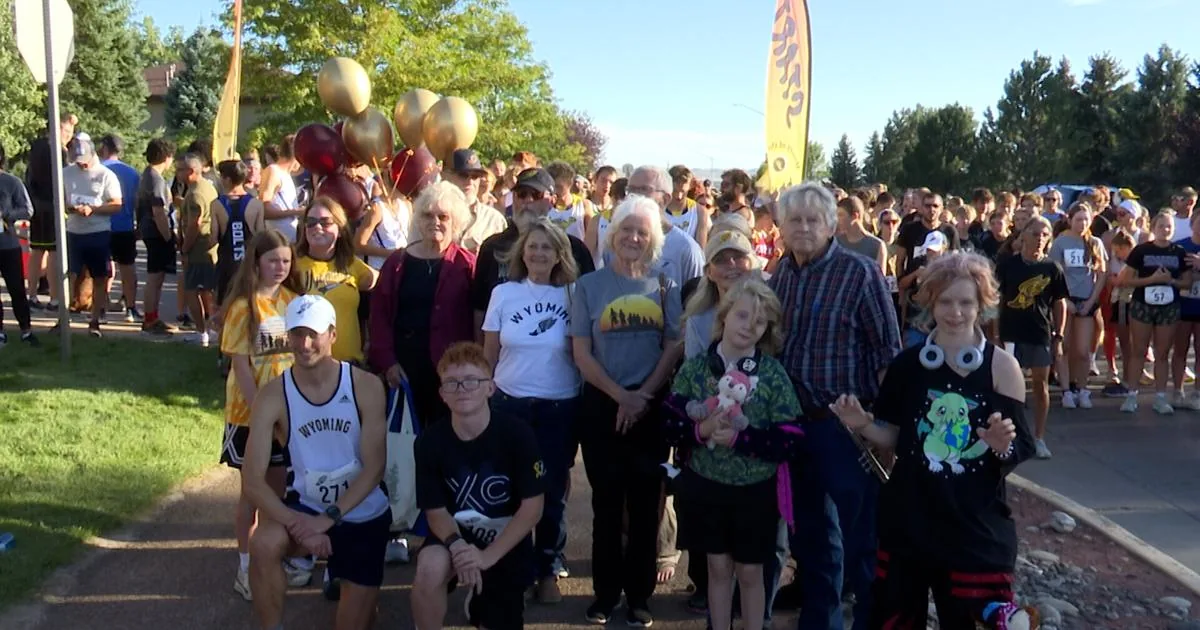
GILLETTE, WY — Family members, runners and coaches gathered in Gillette to mark 25 years since eight University of Wyoming cross-country athletes were killed in a drunken-driving crash on U.S. Highway 287. The memorial event brought together people connected to the victims, along with current high school and college runners, for a kids’ run, a 5K and an 8-mile race.
The anniversary also renewed attention on the deadliest chapter in the history of Wyoming running. The men were returning to Laramie from Fort Collins, Colorado, in the early hours of Sept. 16, 2001, when their Jeep Wagoneer was struck head-on at about 1:30 a.m. by another UW student-athlete, Clint Haskins. Authorities said Haskins had a blood alcohol content of 0.160.
How the fatal crash unfolded on U.S. Highway 287
The collision happened as the runners were driving north toward campus after a trip to Fort Collins. The Jeep Wagoneer carried all eight athletes and none survived the impact. The crash became known statewide as the “Wyoming 8” tragedy and left the university’s distance program devastated.
The eight victims were Cody Brown, 21, of Hudson, Colorado; Kyle Johnson, 20, of Riverton; Joshua Jones, 22, of Salem, Oregon; Justin Lambert-Belanger, 20, of Timmins, Ontario, Canada; Morgan McLeland, 21, of Gillette; Kevin Salverson, 19, of Cheyenne; Nicholas Schabron, 20, of Laramie; and Shane Shatto, 19, of Douglas. Their deaths quickly became one of the most painful moments in University of Wyoming athletics history.
Haskins survived the collision and later became identified as the driver of the other vehicle. The blood-alcohol figure cited by officials underscored the role alcohol played in the fatal head-on crash.
Memorial runs keep the athletes’ names in view
In the years since the crash, several annual events have been created to remember the runners. Those include the Shane Shatto Memorial wrestling tournament in Douglas, the Berry Bryant/Kyle Johnson Memorial Cross Country Meet in Riverton, the Kevin Salverson Invitational in Cheyenne and the Silent Trails Memorial Race near Laramie.
Gillette’s remembrance event is especially tied to Morgan McLeland’s hometown. The “Memory of the 8” run takes place each year on the anniversary of the crash and was started by Sergio “Sonny” Roberts, who said he used the memory of the eight runners as training motivation while preparing for Boston Marathon qualifying.
Roberts said he wanted a purpose during long work shifts in the mines, and he chose to honor the athletes by running one mile for each of them. That personal effort later grew into a community tradition that now draws families, runners and local supporters together every Sept. 16.
The annual Gillette run draws families and younger relatives
This year marked the 16th edition of the Gillette event and the 25th anniversary of the crash. Organizers hosted a kids’ run, a 5K and an 8-mile race, and the turnout included local high school athletes, the University of Wyoming cross-country team and many community members.
Several family members attended, including the Salversons, the Shattos, the Schabrons, the Johnsons, the McLelands and the Browns. Among the younger relatives was Kaiden Shatto, a sophomore on the Douglas Bearcats cross-country team, who said honoring his uncle means a great deal to him and his family.
Robbie McLeland, Morgan McLeland’s sister-in-law, said the gathering helps families spend the day with others connected to running instead of isolating themselves at a grave. For many, the event has become both a memorial and a shared place of support.
University of Wyoming coaches still feel the loss
The crash remains deeply felt inside the University of Wyoming program. Former head coach Jim Sanchez said before his 2024 induction into the UW Athletics Hall of Fame that the tragedy still haunts him and that it was especially hard on the team at the time.
Current head coach Scott Dahlberg said he was in high school when the crash happened and did not fully understand its impact until he ran in college and learned more from other athletes. Since joining the Wyoming coaching staff in 2016, he has made it a yearly priority to educate his team about the eight runners.
Dahlberg said it is important for his athletes to take part when schedules allow. This year, competition travel lined up with the memorial, letting a group from the program join the commemoration in Gillette.
A quarter-century later, the Wyoming 8 remain central to the community
For the families, the anniversary was a chance to see how widely the runners are still remembered. T-shirts and hats nearly sold out, and hundreds of people raced or attended the event. The turnout reflected how strongly the story still resonates across Wyoming.
Chris Schabron, Nicholas Schabron’s brother, said the continuing support can be emotional because it shows people still care after so many years. He said it means a lot that the athletes are honored together and that their memory remains active in the running community.
Other relatives echoed that feeling, saying the events help younger family members connect with the brothers, sons and uncles they never had a chance to know. On the 25th anniversary, the message in Gillette was clear: the Wyoming 8 are still being remembered, and the tradition built around them shows no sign of fading.